When Australia's Army Got Outsmarted by Birds: The Military's Most Feathered Defeat
When Birds Became Public Enemy Number One
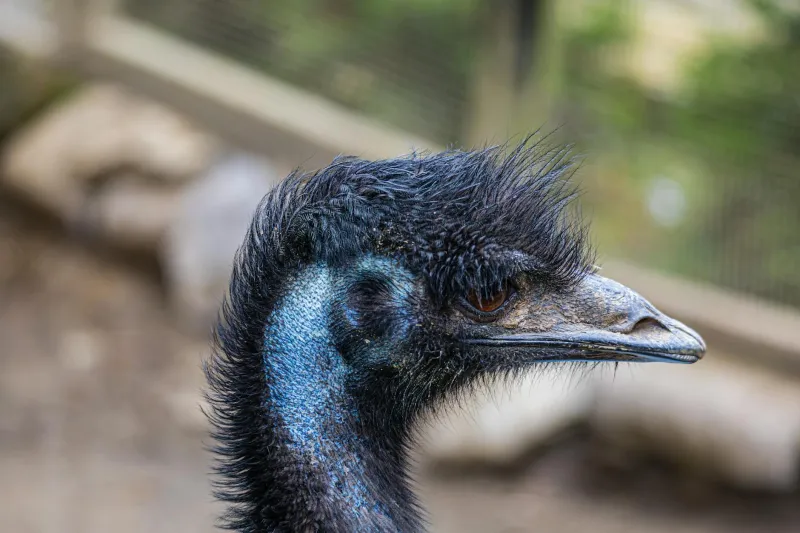
Picture this: a government official sits at his desk, reviewing a military report that reads like something from a cartoon. The enemy forces have scattered under fire, regrouped with tactical precision, and continue to wreak havoc across the countryside. Oh, and they're six-foot-tall flightless birds.
Welcome to 1932 Australia, where the federal government declared what would become known as the "Great Emu War" — and promptly got their feathers ruffled by an army of emus that refused to play by military rules.
The Feathered Invasion That Started It All
After World War I, the Australian government encouraged veterans to settle in Western Australia's wheat belt with promises of farmable land. What they didn't mention was that this territory happened to be prime real estate for emus — massive, territorial birds that migrate seasonally and have zero respect for property lines.
By 1932, approximately 20,000 emus had descended on the region like a feathered locust swarm. These weren't your garden-variety backyard birds. Emus stand up to six feet tall, can run 30 miles per hour, and possess an almost supernatural ability to destroy crops. They trampled wheat fields, broke through fences, and left behind a trail of agricultural devastation that would make a tornado jealous.
The farmers were desperate. Their livelihoods were being systematically destroyed by what essentially amounted to a gang of oversized chickens with attitude problems.
When Diplomacy Fails, Send in the Guns
Faced with mounting pressure from constituents, the government decided on a solution that seemed perfectly reasonable at the time: deploy the military. After all, how hard could it be to handle some birds?
On November 2, 1932, Major G.P.W. Meredith of the Royal Australian Artillery arrived in Campion, Western Australia, armed with two Lewis machine guns, 10,000 rounds of ammunition, and the confidence of someone who had never tried to corner an angry emu.
The plan was simple: locate the emu flocks, set up the machine guns, and mow them down like enemy soldiers. It was going to be a quick, efficient operation that would solve the farmers' problems and give the military some easy target practice.
Spoiler alert: emus didn't read the tactical manual.
Military Strategy Meets Emu Intelligence
The first engagement was a disaster that would have been hilarious if it weren't so embarrassing for everyone involved. The soldiers spotted a flock of about 50 emus and opened fire. The result? A few birds down and the rest scattering in every direction like they'd been planning escape routes for weeks.
But here's where it gets really weird: the emus seemed to learn from the experience. They started posting sentries — actual bird lookouts that would spot the soldiers from a distance and alert the flock. When the machine guns opened fire, the emus would split into small groups and run in zigzag patterns that made them nearly impossible to hit.
Major Meredith later reported that the birds displayed "guerrilla tactics" and showed an "uncanny ability to disappear into the scrubland." He was essentially admitting that his military unit was being outmaneuvered by animals with brains the size of walnuts.
The Numbers Don't Lie
After six days of combat, the military had fired 2,500 rounds and killed approximately 50 emus. That's 50 bullets per bird — a kill ratio that would make any accountant weep. Meanwhile, the emu population remained largely intact and continued their agricultural rampage with what witnesses described as "renewed enthusiasm."
The operation was quietly called off, but the farmers' pleas brought the military back in late November for a second attempt. This time, they managed slightly better numbers: about 100 emus killed after firing 9,860 rounds. Still, with an estimated 20,000 emus in the region, it was like trying to empty a swimming pool with a teaspoon.
The Aftermath of Defeat
By early December, the military officially withdrew, and the government tried to pretend the whole thing never happened. Major Meredith's final report diplomatically suggested that the emus had "won" due to their mobility and the difficulty of the terrain.
The farmers, meanwhile, were left to deal with their emu problem through more conventional means: bounties, fencing, and poison. Ironically, these methods proved far more effective than machine guns and military tactics.
Why This Actually Happened
The Great Emu War sounds like something from a Monty Python sketch, but it perfectly captures the collision between human overconfidence and nature's unpredictability. The Australian government approached a wildlife management problem with military solutions, assuming that superior firepower would automatically lead to victory.
What they discovered was that emus, despite lacking military training, possessed natural advantages that made them formidable opponents: speed, intelligence, and the home field advantage of knowing every hiding spot in thousands of square miles of scrubland.
Today, the Great Emu War stands as a reminder that sometimes the most sophisticated plans can be defeated by the simplest opponents — especially when those opponents have evolved for millions of years to survive in harsh environments and don't particularly care about human military doctrine.
The emus, for their part, continue to thrive across Australia, blissfully unaware that they once defeated one of the world's most professional military forces. They remain undefeated.