
The Morning Meal That Almost Required a Prescription
Before you pour your next bowl of cereal, consider this: there was a time when federal regulators seriously debated whether Kellogg's Corn Flakes should be classified as a drug rather than food. In the early twentieth century, a bureaucratic battle erupted that nearly forced one of America's most iconic breakfast cereals to be sold in pharmacies instead of grocery stores.
The conflict began when Kellogg's marketing department made claims about their product that caught the attention of newly empowered federal food regulators. What started as a dispute over advertising language escalated into a fundamental legal question: where exactly does food end and medicine begin?
The answer to that question would quietly reshape the American grocery store and establish regulatory principles that still govern every nutrition label we read today.
When Corn Flakes Claimed to Cure Everything
To understand how breakfast cereal nearly became a controlled substance, you have to appreciate just how ambitious early twentieth-century food marketing could be. Kellogg's wasn't content to simply sell corn flakes as a tasty morning meal — they positioned their product as a comprehensive health solution.
Advertisements from the period claimed that regular consumption of corn flakes could cure digestive ailments, improve mental clarity, enhance physical strength, and even address what Victorian-era marketing delicately referred to as "nervous conditions." The cereal box itself featured detailed explanations of how the product's nutritional properties could replace various medical treatments.
This wasn't unusual for the era. Before modern pharmaceutical regulation, the line between food and medicine was incredibly blurry. Patent medicines were sold alongside groceries, and food manufacturers routinely made therapeutic claims that would horrify modern regulators.
But Kellogg's took things a step further. They began marketing corn flakes not just as healthy food, but as a scientifically formulated therapeutic product designed to address specific medical conditions.
The FDA's Breakfast Dilemma
The newly created Food and Drug Administration found itself facing an unprecedented question: if a food manufacturer makes specific medical claims about their product's therapeutic benefits, does that product stop being food and become medicine?
 Photo: Food and Drug Administration, via c8.alamy.com
FDA regulators were genuinely puzzled. Corn flakes were obviously food — people ate them for breakfast, they provided nutrition, and they satisfied hunger. But Kellogg's marketing materials read like pharmaceutical advertisements, complete with detailed explanations of how the product's ingredients addressed various health conditions.
The regulatory framework of the time offered little guidance. The Pure Food and Drug Act of 1906 had established federal authority over food safety and drug efficacy, but it hadn't anticipated products that straddled both categories so aggressively.
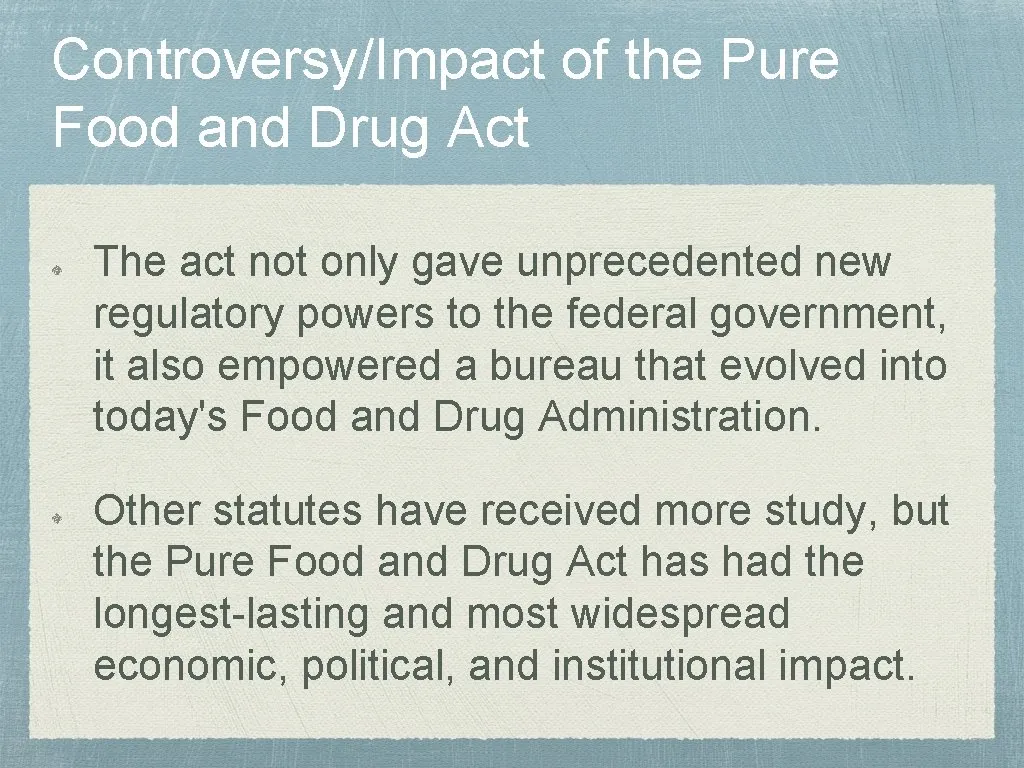 Photo: Pure Food and Drug Act of 1906, via slidetodoc.com
Internal FDA memos from the period, preserved in government archives, reveal the agency's confusion. One particularly memorable document asked, "If we allow breakfast cereal to make medical claims, what stops every food manufacturer from becoming an unlicensed pharmacy?"
The Legal Battle That Redefined Breakfast
Kellogg's initially dismissed the FDA's concerns as bureaucratic overreach. The company argued that corn flakes were obviously food, regardless of what health benefits they might provide. The idea that breakfast cereal could be regulated like medicine struck them as absurd.
But the FDA was serious. Regulators began building a case that Kellogg's marketing claims had transformed corn flakes from a food product into an unlicensed pharmaceutical. If successful, the classification would require Kellogg's to either remove all health claims from their marketing or submit to the same regulatory oversight as drug manufacturers.
The implications were staggering. Drug regulation in the early 1900s was far more restrictive than food regulation. Pharmaceutical products required detailed efficacy studies, controlled manufacturing processes, and specific labeling requirements. Most importantly, they could only be sold through licensed pharmacies.
Kellogg's faced the very real possibility that corn flakes would have to be sold behind pharmacy counters, potentially requiring prescriptions for purchase.
When Bureaucrats Decide What You Can Eat for Breakfast
The regulatory standoff lasted for nearly two years, during which Kellogg's operated in legal limbo. The company continued manufacturing and selling corn flakes, but under constant threat that federal regulators could reclassify their product at any moment.
The situation became even more complex when other cereal manufacturers began watching the case carefully. If Kellogg's corn flakes were classified as medicine, what would happen to other breakfast cereals that made similar health claims? The entire emerging breakfast cereal industry hung in the balance.
Meanwhile, consumers remained largely unaware that their morning meal was the subject of a fundamental regulatory battle. Grocery stores continued selling corn flakes in the food aisles, while federal bureaucrats debated whether those same products belonged in pharmacies.
The absurdity of the situation wasn't lost on contemporary observers. Newspaper editorials mocked the idea that federal regulators might require prescriptions for breakfast cereal, but the legal questions underlying the dispute were genuinely complex.
The Compromise That Created Modern Food Labels
The resolution came through a regulatory compromise that neither side had initially considered. Rather than classifying corn flakes as either pure food or pure medicine, the FDA created a new category: food products with regulated health claims.
Under this framework, Kellogg's could continue selling corn flakes as food, but any health-related marketing claims would be subject to specific federal oversight. The company would have to substantiate their therapeutic claims with evidence, use approved language in their advertising, and include standardized disclaimers on their packaging.
This compromise established the foundation for modern nutrition labeling. The detailed nutritional information, health claims, and regulatory disclaimers that appear on every cereal box today trace their origins directly to the bureaucratic battle over whether corn flakes were food or medicine.
The Breakfast Revolution Nobody Noticed
The Kellogg's case quietly revolutionized how Americans think about food and health claims. Before the corn flakes controversy, food manufacturers could make virtually any claim about their products' therapeutic benefits. After the resolution, a complex regulatory framework governed how companies could discuss the relationship between nutrition and health.
Every "part of a balanced breakfast" disclaimer, every "may help reduce cholesterol" claim, and every detailed nutrition facts panel exists because federal regulators once seriously considered whether breakfast cereal should be sold in pharmacies.
The precedent established by the corn flakes case extended far beyond breakfast cereals. The regulatory principles developed during the dispute now govern how all food manufacturers can discuss the health benefits of their products, from energy drinks to organic vegetables.
The Legacy of Regulated Breakfast
Today, the idea that corn flakes could have been classified as medicine seems absurd. But the regulatory battle that prevented that classification created the framework that still governs every grocery store aisle in America.
The next time you read a nutrition label or notice carefully worded health claims on food packaging, remember that those regulatory safeguards exist because federal bureaucrats once had to seriously consider whether breakfast cereal belonged in a pharmacy.
Sometimes the most important regulatory battles are fought over the most ordinary products. In this case, a bowl of corn flakes became ground zero for legal definitions that still shape how Americans understand the relationship between food and medicine more than a century later.