They Built an Elementary School Over a Fire That Had Been Burning Underground for Years
Picture a standard American elementary school. Linoleum floors. Construction paper turkeys on the bulletin boards. The faint smell of cafeteria pizza on Fridays. Now picture that same school sitting directly above a coal seam that has been quietly burning underground for years — and nobody in charge knowing about it until the building is already full of kids.
That is not a hypothetical. That is what happened in Carbondale Township, Michigan.
A Fire That Started Before the School Was Built
To understand how this happened, you have to go back further than the school itself. Michigan's Upper Peninsula has a long coal and mineral mining history, and like many communities built on top of extractive industries, some of that history was not carefully documented once the mining stopped.
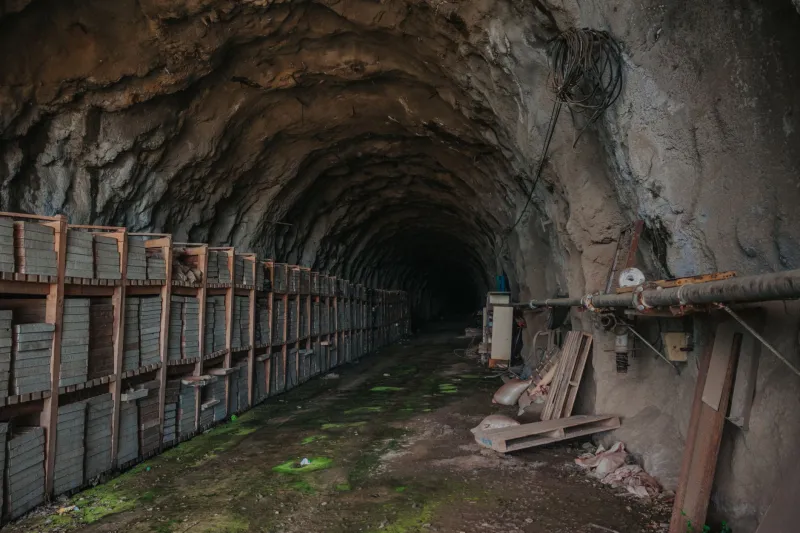
Abandoned mine shafts and coal seams don't simply become inert when operations cease. Left unmonitored and unsealed, they can be vulnerable to spontaneous combustion — a process where coal oxidizes slowly over time, generating heat, until conditions are right for sustained burning. Underground coal fires are not rare phenomena. There are hundreds of them burning across the United States at any given moment, some of them for over a century.
The fire beneath the Carbondale Township school is believed to have ignited in the early 1960s, when the abandoned coal deposits in the area reached the right combination of oxygen exposure and internal heat. By the time anyone thought to build a school in the vicinity, the fire had already been burning underground for years — but because it was underground, it was invisible.
Local officials, working from maps and records that were either incomplete or simply not consulted, approved the construction site. The school went up. Students arrived. Life proceeded as normal.
The Signs Were There — If Anyone Had Been Looking
Underground coal fires don't stay entirely secret. They announce themselves, gradually, through a set of physical symptoms that are unmistakable once you know what you're seeing.
The ground above an active underground fire can subside and crack as the burning coal collapses the substrate beneath it. Gases — including carbon monoxide and carbon dioxide — can seep upward through the soil. In winter, snow melts in irregular patterns above the burn zone because the ground is warmer than it should be. Vegetation sometimes dies in patches. The earth, in some places, can feel warm to the touch.
At various points over the years, staff and community members noticed things that, in retrospect, fit this profile. Unusual warm patches on the school grounds. Odors that came and went. Cracks in pavement that didn't seem to have an obvious cause. These observations were noted, occasionally reported, and then attributed to other explanations — soil settling, seasonal changes, the general unpredictability of old infrastructure.
Nobody connected the dots to what was happening several feet below the surface.
The Discovery
The confirmation that something was genuinely wrong came through a combination of persistent local concern and eventually, formal geological assessment. When investigators actually drilled and sampled the ground beneath and around the school property, what they found was not ambiguous: active combustion, elevated ground temperatures, and gas readings that made the site's continued use as a children's educational facility very difficult to justify.
The particulars of the discovery process — who raised the alarm, which officials responded and how quickly, what the initial internal assessments looked like — form a familiar pattern in stories like this one. There was a period of investigation that stretched longer than it probably should have. There were assurances that the situation was being monitored. There were questions about liability and cost that complicated the timeline.
For the families whose children had been attending school on that site, the revelation landed hard. The question that kept surfacing was not just what do we do now but how long has this been happening, and why didn't someone catch it sooner?
The Uncomfortable Truth About Underground Fires
Here is the part of this story that makes it genuinely unsettling rather than just strange: underground coal fires are extraordinarily difficult to extinguish. You can't simply pour water on them. The burning material is inaccessible, spread through seams and fissures in the earth, and deprived of the oxygen-cutting methods that work on surface fires.
The primary interventions — excavating the burning material, pumping in slurry to smother the fire, drilling to inject inert gas — are expensive, logistically complex, and not always successful. Some underground fires in the United States have been burning for so long and spread so far that remediation has been deemed effectively impossible. Centralia, Pennsylvania, the most famous example, has been burning since 1962 and is still going. The town was largely abandoned as a result.
The Michigan situation was caught before it reached Centralia's scale, but the fire itself doesn't simply stop because humans have noticed it. Remediation efforts began, but underground fires operate on geological timelines, not human ones.
What This Story Is Really About
The surreal image of children doing multiplication tables above a subterranean fire is striking enough on its own. But the deeper strangeness here is systemic.
Abandoned mine records in the United States are notoriously inconsistent. Hundreds of communities across coal country sit above shafts, tunnels, and seams that were dug, used, and then left without comprehensive documentation. Construction decisions — for homes, schools, roads, commercial buildings — are made on the basis of available information, and sometimes the available information is simply incomplete.
The Michigan school fire isn't a story about malice. It's a story about institutional gaps, the invisibility of underground hazards, and how thoroughly normal life can proceed above something genuinely dangerous when no one has the tools — or the mandate — to look down.
The fire is still there. That part hasn't changed.