Uncle Sam's Great Camel Experiment: How the U.S. Army Lost 1,000 Desert Ships in America
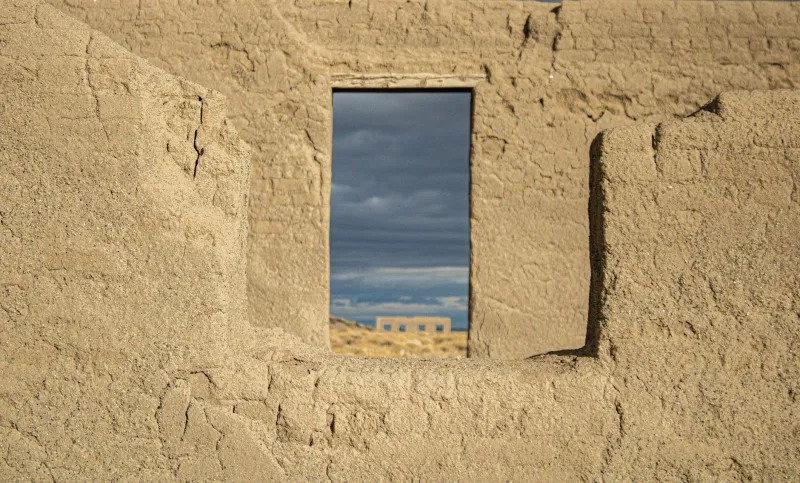
When Congress Decided Camels Were the Future of Warfare
Picture this: It's 1855, and the United States Army is seriously considering replacing horses with camels. Not as a joke or a publicity stunt, but as official military policy backed by Congressional funding and genuine strategic thinking. What happened next was one of the most bizarre and forgotten chapters in American military history.
The U.S. Camel Corps wasn't some frontier tall tale — it was a real experiment that saw over 1,000 camels imported from the Middle East to serve in the American Southwest. For a brief moment, the future of American cavalry looked distinctly Middle Eastern.
The Mastermind Behind America's Strangest Army Unit
The architect of this desert dream was Jefferson Davis — yes, the future Confederate president — who served as Secretary of War under Franklin Pierce. Davis was convinced that camels could revolutionize military transport in the arid Southwest, where horses struggled with heat, water scarcity, and rough terrain.
His logic was actually sound. Camels could carry 600 pounds compared to a mule's 200, travel longer distances without water, and navigate desert conditions that left horses exhausted. The military had been struggling with supply lines across Texas, New Mexico, and California territories. Why not learn from cultures that had mastered desert warfare?
In 1855, Congress approved $30,000 for the "Camel Military Corps" — roughly $1 million in today's money.
Operation Desert Ship
Major Henry Wayne and Navy Lieutenant David Porter were dispatched to the Middle East with a shopping list that would make any zoo jealous. They purchased 33 camels from Egypt, Turkey, and Tunisia, along with several Middle Eastern handlers who knew how to manage the temperamental beasts.
The USS Supply carried this unusual cargo to Texas in 1856, where the camels were stationed at Camp Verde, about 60 miles northwest of San Antonio. A second shipment brought the total to 75 camels — not quite the 1,000 originally envisioned, but enough to test the concept.
When Camels Met Cowboys
The initial results were promising. Camels proved superior to mules in desert conditions, carrying heavier loads across longer distances. They could go without water for days and eat vegetation that would kill horses. During surveying expeditions across the Southwest, the Camel Corps performed exactly as Davis had predicted.
But there was a problem: nobody else liked them.
American soldiers found camels difficult, smelly, and prone to spitting. The animals terrified horses, causing chaos whenever cavalry units encountered the camel trains. Local civilians complained about the strange beasts wandering their territories. Most importantly, the handlers brought from the Middle East struggled with cultural barriers and homesickness.
Civil War Chaos and Forgotten Herds
Then came 1861 and the Civil War, which killed the Camel Corps more effectively than any military defeat. Jefferson Davis left to lead the Confederacy, taking his enthusiasm for desert warfare with him. The Union Army had more pressing concerns than experimental livestock.
Camp Verde was abandoned, and here's where the story gets truly bizarre: the Army just... lost track of the camels. Some were sold to circuses. Others were released into the wild. A few were transferred to other military posts and forgotten. The precise fate of most camels remains unknown.
The Great American Camel Invasion
What followed was decades of camel sightings across the American Southwest. Miners, ranchers, and travelers reported encounters with wild camels wandering the deserts of Texas, Arizona, and Nevada. These weren't hallucinations or frontier myths — they were the descendants of America's forgotten military experiment.
The most famous was the "Red Ghost," a massive camel that allegedly terrorized Arizona Territory for years, sometimes spotted with a human skeleton strapped to its back. While that particular detail sounds like folklore, documented camel sightings continued well into the 1900s.
The Last Survivors
The final confirmed U.S. Army camel died in 1934 at the Los Angeles Zoo — nearly 80 years after the original experiment began. Wild camels were reportedly spotted in the American desert as late as the 1940s, though these sightings become increasingly questionable as decades passed.
America's Most Expensive Desert Mirage
The U.S. Camel Corps represents a fascinating "what if" moment in American history. Had the Civil War not intervened, would camel cavalry have become standard in the Southwest? Would American military culture have adapted to include Middle Eastern animal husbandry?
Instead, we're left with one of military history's strangest footnotes: the time America imported 1,000 camels for warfare, then promptly lost them in the desert. It's a perfect metaphor for government efficiency — bold vision, solid planning, complete failure to follow through.
Legacy of the Lost Legion
Today, Camp Verde operates as a state historic site where visitors can learn about Texas's brief experiment with camel cavalry. A few monuments scattered across the Southwest commemorate this forgotten chapter, but most Americans have no idea their military once included a Camel Corps.
Perhaps that's fitting. In a country that's tried everything from nuclear-powered aircraft to psychic warfare, importing camels for desert combat seems almost reasonable. The only truly surprising part is that we managed to lose 1,000 large mammals in our own backyard and never bothered looking for them.