The Penny Error That Made Garbage Collectors Richer Than Doctors
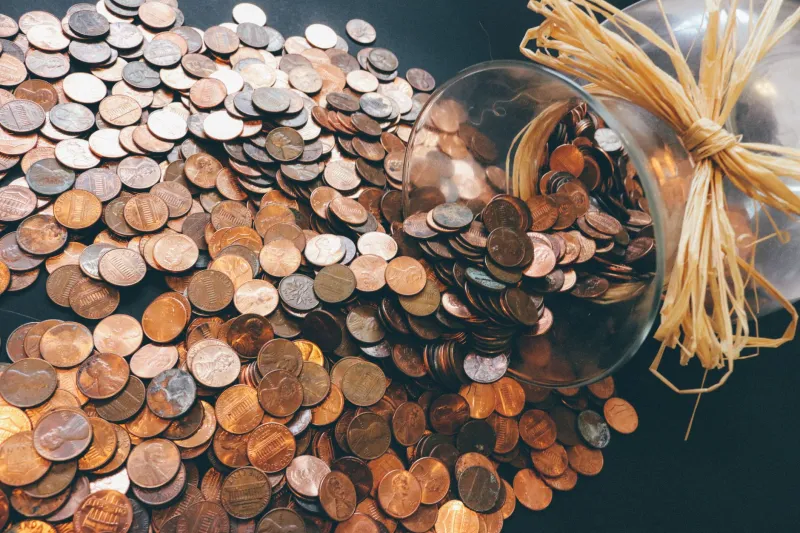
The Million-Dollar Mistake in Your Couch Cushions
Somewhere in America right now, someone is throwing away a penny worth more than a luxury car. They have no idea. Neither do you, probably. But thanks to a bureaucratic screw-up during World War II, a handful of ordinary-looking pennies could make their owners instantly wealthy—if they knew what to look for.
This is the story of the 1943 copper penny error, a manufacturing mistake so profitable that it turned garbage collectors into millionaires and sparked a nationwide treasure hunt that continues today.
When War Changed Everything (Including Pocket Change)
In 1943, America was deep in World War II, and every ounce of copper was desperately needed for ammunition and military equipment. The U.S. Mint made the logical decision: stop making pennies from copper and switch to zinc-coated steel. It seemed simple enough.
 Photo: U.S. Mint, via i.ebayimg.com
But the Philadelphia, Denver, and San Francisco mints were massive operations producing millions of coins daily. When you're dealing with that scale, "simple" changes become complicated fast. Workers had to retool machines, adjust settings, and clear out existing materials. In the chaos of wartime production, some copper blanks—the raw discs that become pennies—got left behind in the machinery.
Nobody noticed when those copper blanks got stamped with 1943 dates and mixed in with the new steel pennies. The error was invisible until the coins hit circulation, and even then, most people didn't pay attention. A penny was a penny, right?
The Collectors Who Started Paying Attention
Wrong. By the 1950s, coin collectors began noticing something strange. Among the millions of steel pennies from 1943, a few copper ones kept turning up. These weren't counterfeits or replicas—they were genuine U.S. Mint products, just made from the wrong metal.
The U.S. Treasury initially denied the error's existence. Officials claimed that any 1943 copper pennies were either fakes or steel pennies that had been chemically altered. This denial only made collectors more interested. Nothing drives up demand like official government skepticism.
As more examples surfaced and were authenticated by independent experts, the Treasury quietly acknowledged what had happened. But by then, the cat was out of the bag. The 1943 copper penny had become the holy grail of American coin collecting.
The Treasure Hunt Begins
Word spread through coin collecting circles, then into mainstream media. Suddenly, Americans were scrutinizing their pocket change with the intensity of prospectors panning for gold. The story captured imaginations: ordinary people might be carrying extraordinary wealth without knowing it.
Bank tellers reported customers bringing in coffee cans full of pennies to examine. Metal detectorists started focusing on areas where old coins might be found. Even garbage collectors began paying closer attention to the coins they found while working.
And some of them struck it rich.
From Trash to Treasure
Don Lutes Jr., a high school student in 1947, found a 1943 copper penny in his lunch money. He held onto it for decades, watching its value climb from a curiosity worth a few dollars to a certified treasure worth tens of thousands. When Lutes died in 2018, his penny sold at auction for $1.7 million.
 Photo: Don Lutes Jr., via img-3.journaldesfemmes.fr
A Massachusetts collector found another example in a handful of change from a candy store in the 1970s. That penny eventually sold for $1.75 million in 2010.
These weren't wealthy collectors with expensive metal detectors or professional treasure hunters. They were ordinary people who happened to look closely at their spare change and got incredibly lucky.
The Numbers Game
Experts estimate that fewer than 20 genuine 1943 copper pennies exist today, though the exact number remains unknown. Each confirmed example that surfaces makes headlines and breaks auction records. The rarity isn't artificial—it's the result of a genuine accident during wartime production.
What makes the story even more remarkable is how many of these coins probably got spent or thrown away before anyone realized their value. In 1943, a penny had real purchasing power. People used them for transactions, not collectibles. Countless examples likely disappeared into circulation and were eventually discarded as worn-out coins.
The Modern Hunt Continues
Today, the search for 1943 copper pennies has evolved into a sophisticated operation. Professional coin dealers use high-powered magnets to quickly identify steel versus copper pennies. Serious collectors employ precision scales and chemical tests to verify authenticity.
But the basic thrill remains the same: somewhere out there, more of these coins are waiting to be discovered. They could be in old collections, forgotten jars, or even still circulating in everyday commerce.
Why This Error Matters Beyond Money
The 1943 copper penny represents something uniquely American: the idea that extraordinary opportunity can be hiding in plain sight. It's a reminder that government mistakes, however embarrassing, sometimes create unexpected windfalls for ordinary citizens.
The story also reveals how wartime urgency can produce unintended consequences that last for generations. A rushed decision to change coin composition, combined with the inevitable human error of large-scale manufacturing, created a mystery that has fascinated Americans for over 80 years.
The Ultimate Lottery Ticket
Every time you get change at a store, you're participating in a lottery you probably don't even know exists. The odds are astronomical—worse than winning a state lottery—but the potential payoff is life-changing.
Somewhere in America, there's probably a 1943 copper penny sitting in a jar on someone's dresser, or mixed in with loose change in a car's cup holder, or tucked away in an old collection that nobody's looked at in decades.
The person who finds the next one won't need to be a coin expert or professional treasure hunter. They'll just need to be the kind of person who pays attention to details that everyone else ignores.
In a world where most wealth seems reserved for those who already have it, the 1943 copper penny offers something different: the possibility that extraordinary fortune is literally within reach, hiding among the most ordinary objects in our daily lives.