The Accidental Anthem: How Two Schoolteachers Created the Most Legally Expensive Song in History
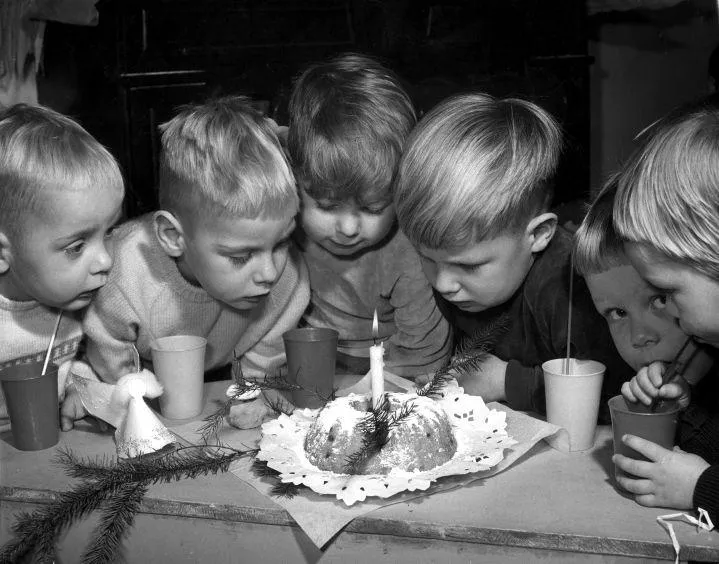
Photo: Nationaal Archief, No restrictions, via Wikimedia Commons
If you wanted to film a birthday scene in a Hollywood movie in the early 2000s, you had two options: pay a licensing fee that could run into the tens of thousands of dollars, or have your characters sing something else entirely. For decades, major studios made that calculation constantly. All because two sisters in Kentucky wrote a song for their kindergarten class and never thought twice about it.
The story of "Happy Birthday to You" is one of the most improbable legal sagas in American cultural history — a tale of accidental creation, corporate opportunism, and a copyright that probably should never have existed in the first place.
The Song That Started as a Classroom Tool
In 1893, Mildred J. Hill and her sister Patty Smith Hill were Louisville schoolteachers with a practical problem. They needed a simple, singable greeting song that young children could perform at the start of the school day. Mildred, a trained musician and church organist, composed a short, bouncy melody. Patty wrote words to go with it: Good morning to you / Good morning to you / Good morning, dear children / Good morning to all.
 Photo: Patty Smith Hill, via www.crosscamp-schweiz.ch
 Photo: Mildred J. Hill, via www.mediamister.com
The song appeared in a 1893 songbook called Song Stories for the Kindergarten. It was not a hit. It was not intended to be a hit. It was a functional classroom tool, the musical equivalent of a attendance sheet.
At some point — and nobody is entirely sure when or how — the original lyrics were swapped out for birthday greetings. The melody stayed exactly the same. The new words were simpler, more universal, and apparently irresistible. By the early twentieth century, the birthday version was spreading across the country through schools, community gatherings, and private celebrations with zero commercial infrastructure behind it. People just... sang it.
Enter the Copyright
In 1935, a music publishing company called Clayton F. Summy Co. registered a copyright on several arrangements of the song, including the birthday lyrics. The legal basis for this was, to put it generously, complicated. The melody had already been published without copyright protection in 1893. The birthday lyrics had been floating around for decades with no clear authorship attached. But copyright law at the time had enough flexibility that the registration stuck.
Patty Hill, still alive in 1935, was listed as a rights holder. When she died in 1946, her estate retained an interest. The copyright eventually passed through several corporate hands, landing ultimately with Warner/Chappell Music, which acquired it as part of a larger catalog purchase in 1988 for $25 million. Warner/Chappell immediately began enforcing the copyright aggressively.
The results were extraordinary. Restaurants were told they couldn't have servers sing the song without a license. Film and television productions were billed licensing fees — estimates of the annual royalty income ranged from $2 million to as high as $5 million per year at the copyright's peak. Some documentary filmmakers, unable to afford the fee, simply cut scenes where people sang the song. Others substituted different birthday tunes. The song that every American learned as a child, the song sung at millions of birthday parties every single day, was technically private property.
The Legal Unraveling
For decades, legal scholars raised eyebrows at the copyright's legitimacy, but nobody with enough resources challenged it — until 2013, when a filmmaker making a documentary about the song's history decided enough was enough.
Jennifer Nelson filed a class-action lawsuit against Warner/Chappell, arguing the copyright was invalid. The case produced a remarkable discovery: researchers digging through historical archives found a 1922 songbook that included the birthday lyrics without any copyright notice, predating Warner/Chappell's claimed ownership window. If the song had been published without copyright protection before the 1935 registration, the entire legal edifice was built on sand.
In September 2016, a federal judge in California ruled that Warner/Chappell had never actually owned a valid copyright on the familiar melody and birthday lyrics. The song was declared public domain. Warner/Chappell agreed to pay $14 million to settle claims from people who had paid licensing fees over the years.
Just like that, the most performed song in the English language — a designation that appears in the Guinness World Records — belonged to everyone again. Or, more accurately, it always had.
What the Story Actually Says
Mildred and Patty Hill wrote a thirty-second classroom song in a Kentucky schoolroom and went home. They did not imagine royalty checks. They did not envision Hollywood studios sweating over licensing agreements. They almost certainly never heard their melody sung at a birthday party with a cake in the room.
And yet that song outlasted them both, outlasted the company that published it, outlasted the corporation that tried to own it, and will almost certainly outlast all of us. It gets sung roughly 10 million times a day worldwide by conservative estimates.
The sisters just wanted the kids to say good morning.
History had other plans.