Holy Loophole: How Sunday Morality Laws Accidentally Gave America Its Favorite Dessert
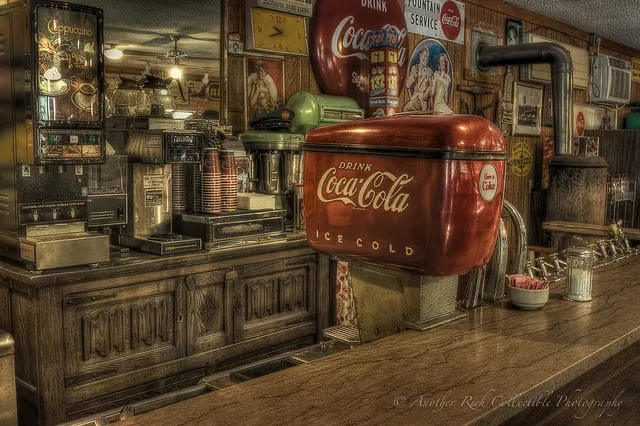
Photo: vintage 1890s soda fountain ice cream sundae parlor, via i.pinimg.com
Imagine a world where enjoying a fizzy, ice-cream-laced soda on a Sunday afternoon is considered a moral failing serious enough to warrant government intervention. Sounds absurd, right? Well, for a stretch of small-town America in the late 1800s, that was the law — and the blowback from those prim little ordinances accidentally rewired American dessert culture forever.
The Sabbath Police Come for Your Soda Fountain
By the 1880s, the soda fountain had become the social hub of small-town American life. Drug stores and confectioneries installed elaborate marble counters where locals would gather for ice cream sodas — a frothy concoction of flavored syrup, carbonated water, and a generous scoop of ice cream. They were delicious, they were cheap, and they were wildly popular.
That popularity made them a target.
Across the Midwest and parts of the South, religious community leaders began pressuring local governments to restrict what they called "soda water tippling" on Sundays. These restrictions fell under the broader umbrella of so-called blue laws — regulations designed to enforce a Christian vision of the Sabbath as a day of rest and reflection, not fizzy indulgence. Towns in Wisconsin, Illinois, and New York passed ordinances specifically prohibiting the sale of ice cream sodas on Sundays. The logic, if you could call it that, was that carbonated beverages were a form of frivolous excitement unsuitable for the Lord's day.
Soda fountain owners were furious. Sunday was one of their busiest days — families out after church, kids with a few spare coins, couples looking for a wholesome afternoon out. Losing Sunday sales wasn't just inconvenient. It was financially devastating.
The Workaround That Changed Everything
Somewhere around 1890 — and here's where the story gets delightfully murky — an enterprising soda jerk figured out the loophole. The law banned ice cream sodas, but it said nothing about ice cream served with syrup and no carbonation. No bubbles, no problem.
Two towns claim credit for the invention that followed: Ithaca, New York, and Two Rivers, Wisconsin, and historians have been politely arguing about it ever since. The Two Rivers account holds that in 1881, a customer named George Hallauer walked into a soda fountain owned by one George Giffy and asked him to pour chocolate syrup over a dish of ice cream — something Giffy apparently only agreed to do on Sundays because it seemed wasteful otherwise. The Ithaca version places the invention in 1892, when a Unitarian reverend named John Scott supposedly ordered the concoction on a Sunday and the name "Sunday" stuck, eventually respelled as "sundae" to avoid any perceived sacrilege in using a holy day's name for a dessert.
 Photo: John Scott, via hockeyworldblog.com
 Photo: Two Rivers, Wisconsin, via www.landsat.com
 Photo: Ithaca, New York, via c8.alamy.com
Whether one story is true, both are true, or neither is entirely accurate, the underlying mechanism is the same: puritanical lawmakers tried to restrict pleasure, and creative entrepreneurs found a way around it. The sundae — that glorious tower of ice cream, syrup, whipped cream, and a cherry — was born directly from legal necessity.
The Laws That Never Left
Here's where it gets even stranger. While the sundae went on to global fame, many of the ordinances that accidentally created it were simply never repealed. Municipalities moved on, society changed, and nobody bothered to dig through the municipal code and formally strike out the old ice cream soda prohibitions.
Legal researchers and local historians have periodically surfaced these zombie ordinances in various states, finding language that still technically restricts the Sunday sale of ice cream sodas in certain jurisdictions. The laws aren't enforced — nobody is getting cited for handing a kid a root beer float on a Sunday afternoon — but they haven't been formally removed either. They just sit there in the code, dusty relics of a moral panic that accidentally produced a culinary revolution.
In one documented case in a small Wisconsin municipality, a local attorney reviewing the town's ordinances in the early 2000s flagged an old blue law that appeared to still restrict carbonated ice cream beverages on Sundays. The town council apparently had a good laugh about it and moved on without formally addressing it. The ordinance, as far as anyone could tell, remained.
The Accidental Legacy
There's a certain beautiful irony baked into this whole story. The people who passed those Sunday restrictions were trying to preserve something — a sense of solemnity, a community standard, a particular vision of what the Sabbath should look like. Instead, they created one of America's most joyful food traditions. Every ice cream parlor in the country, every diner that serves a hot fudge sundae, every summer cookout where someone pulls out the toppings — all of it traces a direct line back to a group of Victorian-era moralists who really, really hated carbonation.
The sundae didn't survive because lawmakers eventually gave up trying to regulate dessert (though they did). It survived because someone looked at an unreasonable rule and thought: okay, but what if I just take out the bubbles?
And honestly? Thank goodness they did.